K-Culture & Real Estate (2/4)
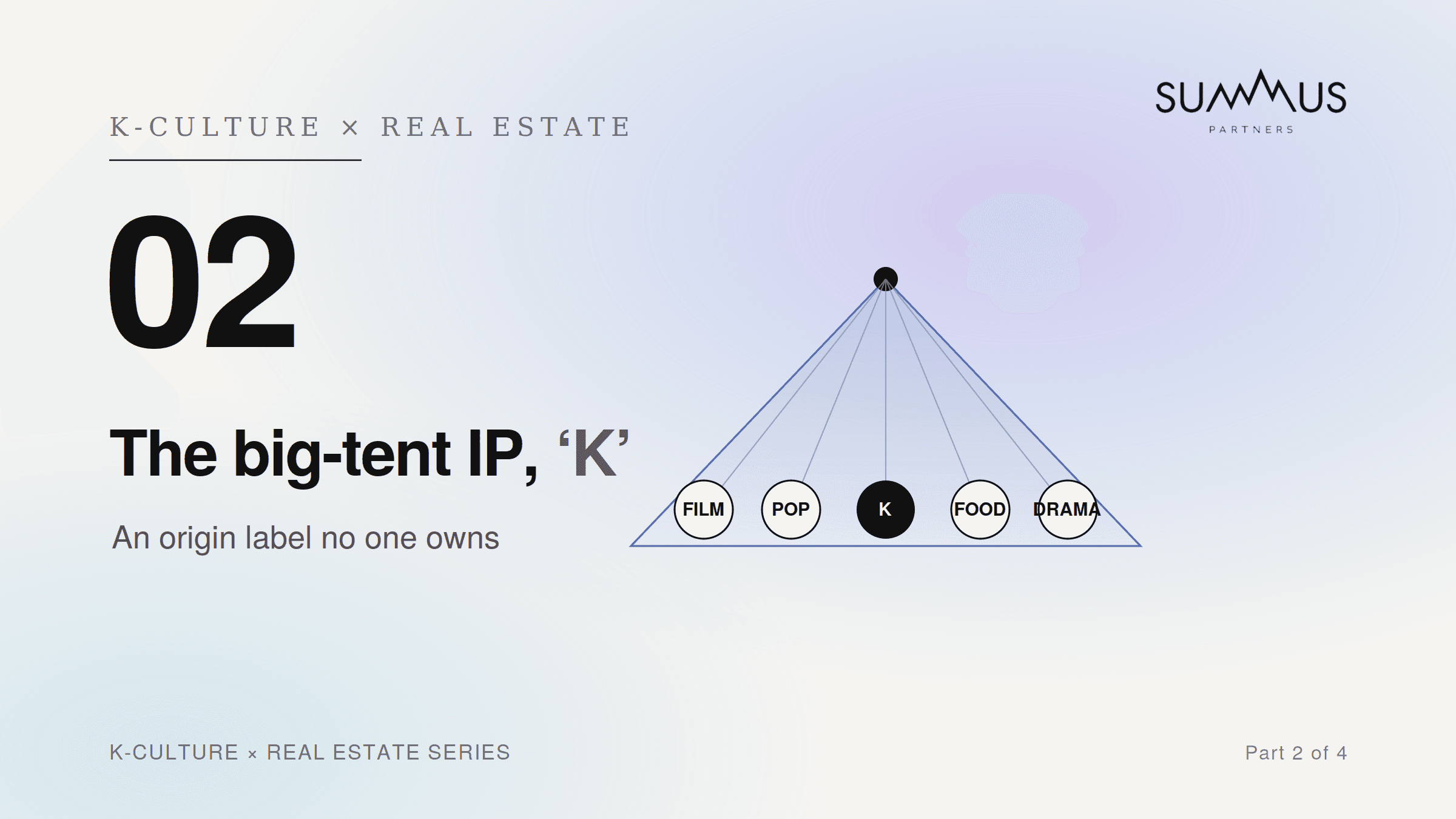
At the end of the last post, the claim was this: Korea's strength isn't any individual IP—it's the label "K" itself.
Let's prove it. There's one perfect piece of evidence.
The "KPop Demon Hunters" Phenomenon
Did you see this film?
An animated feature that hit Netflix in June 2025—and the numbers are almost surreal.
481 million views in the second half of the year alone. The most-watched title in any six-month window in Netflix history—film or series. 3.5x more than the #2 title, "Happy Gilmore 2" (Adam Sandler). It has since crossed 540 million views to become the most-watched film in Netflix history. Four soundtrack songs landed in the Billboard Hot 100 Top 10, and in March 2026 it won the Academy Award for Best Animated Feature. Its theme song "Golden" took Best Original Song too.
Stop here and you might just say, "Wow, K-content is incredible."
But the real point is elsewhere.
No Korean company made this film.
The studio is Sony Pictures Animation. Co-director Maggie Kang is of Korean descent, but most of the work happened in the US and Canada. No Korean entertainment company owns this IP.
And yet the whole world consumed it as Korean. Shamans, snack bars, jjimjilbang saunas, the idol system—that "Korean-ness" was the engine of its success. It's why Kang, on the Oscar stage, said "This is for Korea and for Koreans everywhere."
Why Does This Matter?
Think about it.
If Korea's strength were "a specific company owning a specific IP," then a Sony-made film should have nothing to do with Korea.
The reality is the opposite.
Ownership is scattered, yet the origin premium accrues to Korea.
That's how a big-tent IP works. "K" isn't an asset someone owns—it's a label tied to Korea as the country of origin. Neither Sony nor Netflix can monopolize it. Anyone can attempt "K," but the one that assembles real "K" best is Korea.
And this tent is far wider than you'd think.
It's not just glittering idols. "Parasite" tackled class conflict. "Squid Game" is a brutal contest of people drowning in debt—dark, sharp social critique. Yet the moment the "K" label attaches, the world pays attention.
And it flows both directions. "KPop Demon Hunters" was made abroad yet consumed as Korean. The reverse happens too: the musical "Maybe Happy Ending" started in a tiny Seoul theater, made it to Broadway, and swept six 2025 Tony Awards—its Korean writer becoming the first Korean to win Best Musical, Best Book, and Best Score. One flows inward, the other outward—yet both are bound under "K."
Genre, tone, subject matter, even where it's made—none of it matters. From K-pop's sparkle to K-drama's hard-edged realism to a Broadway stage, the entire spectrum works.
That's the real edge. Individual IP can cool off, but the big tent called "K" keeps generating new content inside it.
A Fascinating Attempt to Put This into Real Estate
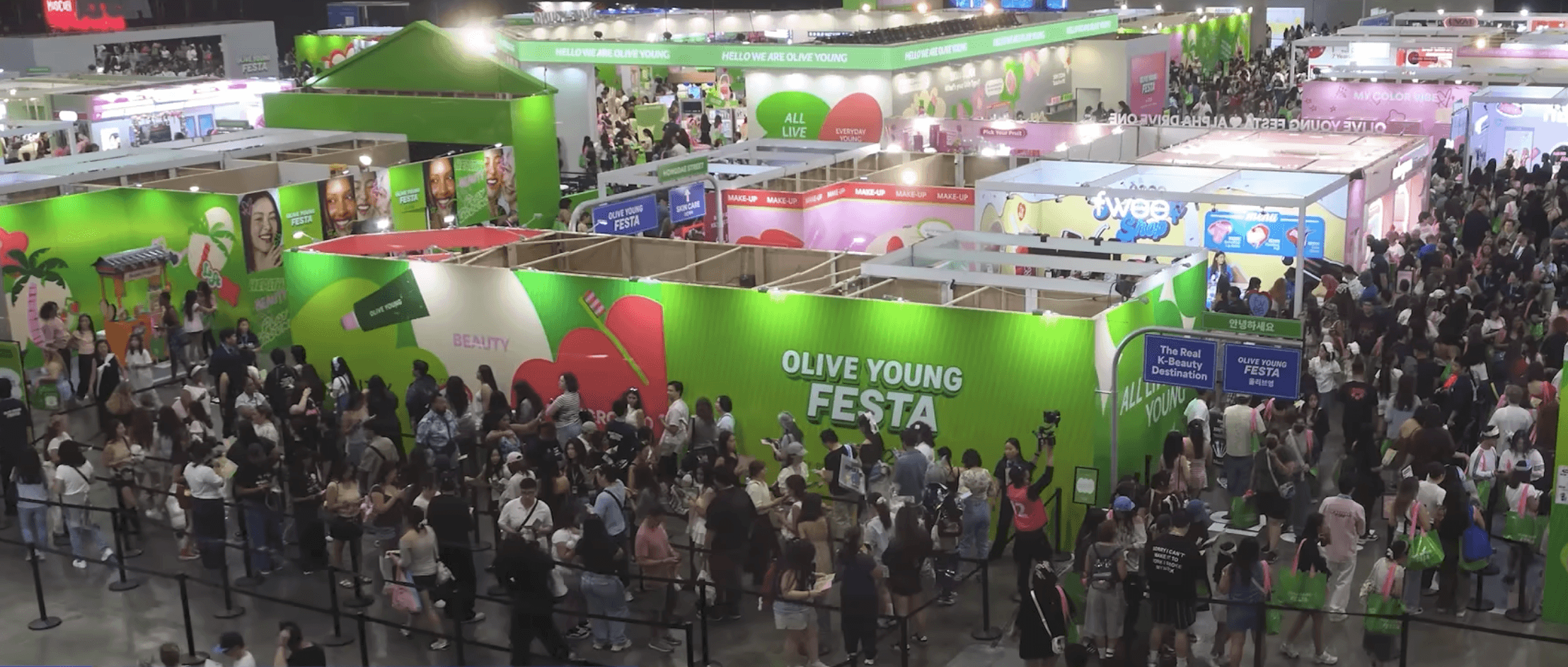
In Southern California (SoCal)—Orange County (OC), specifically—there's a large K-themed mixed-use mall. Built about a decade ago for roughly $325 million (about ₩450 billion), a Korean-themed mixed-use development. The city agreed to refund a substantial share of sales tax for 30 years, foreign capital was raised, and there were even plans for a K-pop performance venue.
The idea was clear: "Build a giant K-culture landmark."
But the early results were brutal.
Financing for the large entertainment complex kept slipping, so construction dragged on—and to make matters worse, the "retail apocalypse" that gutted American brick-and-mortar stores hit during exactly that window. With 600,000 square feet of hardware to fill, anchor tenants (a hotel, YG Entertainment, and others) came too slowly, and the space suffered severe vacancy for a long time. When the pandemic piled on, the hotel component went into bankruptcy protection and ownership eventually passed to creditors. The synergy the mixed-use development had intended—hotel guests spending at the mall, office workers using the retail—never bore fruit; that organic linkage broke apart.
A textbook case of the "build it in a prime location and they'll come" hardware-first development risk.
Liquidation, Sale, and Revival
The project itself has to be counted as a failure. As the hotel component collapsed, assets were carved up and sold off under the creditors, moving toward liquidation. And yet the space didn't end there.
So what saved it?
K-content.
The merchandising mix was overhauled—from fashion and retail toward K-pop merch, Korean franchise restaurants, trendy bakeries, and a cinema. On weekends, the plaza fills with K-pop cover dance and cultural performances. The function shifted from "a place to buy things" to "a place to eat and enjoy."
It drew in not just OC's Asian community but K-pop-obsessed Gen Z of every ethnicity, establishing itself as destination retail.
And it didn't stop there. With this mall as the anchor point, more than 1,000 Korean businesses clustered around it, and the area was eventually designated the city's official "Koreatown." A single mall reshaped the city's entire commercial geography. One operator says 80% of customers are now non-Korean—that's how many people of other ethnicities come specifically to experience the Korean wave.
What This Case Teaches
This project tells a different story than the usual assumption.
It's tempting to file a commercial failure under "it died because it had no content." But the truth is the opposite. What saved this space was precisely K-content.
Sequence is the key.
This project built the hardware first and filled in the content later. That's why it struggled early. Had the content engine been designed first, with the real estate following? A completely different story.
Content Saved the Real Estate
That's the point. By now it's clear that putting "K" into real estate works—powerful enough not just to revive a failing space, but to reshape a city's commercial geography. But sequence matters. A living content pipeline comes first; real estate is the vessel that holds it.
And One More Thing - Now Isn't "Then"
Picture the moment this project launched, over a decade ago. How did the world see Korea back then?
Honestly, "K" then wasn't the "K" of today. As recently as 2018, searching "Korea" in the foreign press mostly surfaced hard-power topics—national division, security crises, the North Korean nuclear issue. Then, starting with "Squid Game" in 2021, Korea became a "content powerhouse," and by 2024 it had risen to an all-encompassing "culture"—K-food, K-pop, K-beauty, K-art.
In other words, that OC project launched when "K" carried far less weight than it does now, and it built the hardware first on top of that. Two headwinds at once.
But now? "K" has become a global big tent that commands an origin premium. We live in an era where "KPop Demon Hunters" wins Oscars. If even that project came back to life on K-content, then what happens when you lead with content and plan it right, at today's level of "K"? A completely different game.
And that content pipeline? Hard to source in California—there, you're outside the mainstream IP ecosystem. In Seoul? Completely different story.
This is the second in a four-part series on the convergence of K-culture and commercial real estate. Next: why Korea is structurally best positioned to run this content engine—and what form of real estate it becomes.
Project & partnership inquiries: pr@summuspartners.net